

Executive summary
If you want to know how science works, check out this interaction. As soon as they figure out you are competent, they find a rock and hide under it rather than engage. Because they can’t engage. There was no scientific justification to remove this paper from a pre-print server.
The Hooker paper had some flaws, but the vaccine safety signal was independent of the flaws (a large sex differential response between vaccinated vs. unvaccinated).
Nobody can explain a bias that would cause that if the vaccines are safe.
So this is the LAST paper you would want to remove if you had an ounce of scientific integrity.
The paper had 20,000 views in just 3 weeks, making it of high interest.
That’s how “science” works. They simply do not care about scientific integrity.
NOT A SINGLE ONE would stand up for what is right. NOT A SINGLE ONE.
See my earlier article on the Hooker paper here.
My letter to the Preprints advisory board
Hello Preprints.org Advisory Board Members,
I am an independent health journalist with 1M readers worldwide.
Earlier this year, the Advisory Board unilaterally decided to withdraw the manuscript “Increased Mortality Associated with 2-Month Old Infant Vaccinations” (https://www.preprints.org/manuscript/202512.1865) by Karl Jablonowski and Brian Hooker.
The public removal notice did not specify which policy violation(s) led to this action. After carefully reviewing the paper, I cannot identify a justification for total removal under your stated policies.
Your policy for withdrawal states that it is reserved for “very exceptional circumstances,” such as “serious scientific errors that cannot be corrected by updating the paper.”
However, this study was a proportional mortality analysis—a recognized and frequently utilized methodology. Any concerns regarding potential biases or over-interpretation of the data could have been addressed through a simple revision, an author’s note, or an updated version of the paper.
Instead, it was decided that the paper needed to be immediately erased entirely without even giving the authors any opportunity whatsoever to react to the decision.
When scientific research analyzing government records—revealing large dose-responsive, brand-specific, and sex-specific mortality signals in infants—is removed from the literature, the public has a right to know why.
Preprints Advisory Board member Professor Niazi has argued in private emails to me that the study’s conclusions were over-interpreted, yet he has refused to respond to repeated requests to provide a scientific explanation for the clear dose-response gradient and brand-specific mortality signals present in the data, nor has he identified why the paper’s wording could not have been amended to note the limitations.
Having personally reviewed nearly 1,000 vaccine studies, I consider this to be the single most important infant vaccine study in history. It is the first to analyze raw, state-level government records to reveal a massive, dose-responsive, and brand-specific mortality signal that the establishment has spent years trying to adjust out of existence. This study doesn’t propose a new theory or invent a new method for analyzing data; it simply exposes the reality hidden in the state’s own death certificates.
Your decision to remove this study from public view is deeply concerning, particularly given the momentum it had already achieved. In just three weeks, the manuscript had accrued 20,000 views—a level of engagement that dwarfs the typical preprint. This was not a quiet, niche research paper; it was a viral signal of intense public interest. Rather than allowing for a scientific dialogue or an updated version that would have addressed your methodological concerns, the Advisory Board chose to erase the study entirely. This action suggests that the ‘risk to the general public’ cited in your policy was not a risk of scientific error, but a risk to the established public health narrative.
I would like to offer you the opportunity to explain the rationale for this decision in a short, recorded video discussion that will be made publicly available. The public deserves to understand why this paper could not be updated, and why its total removal was deemed necessary.
Would any member of the Advisory Board be willing to discuss this decision on the record?
Best regards,
Steve Kirsch
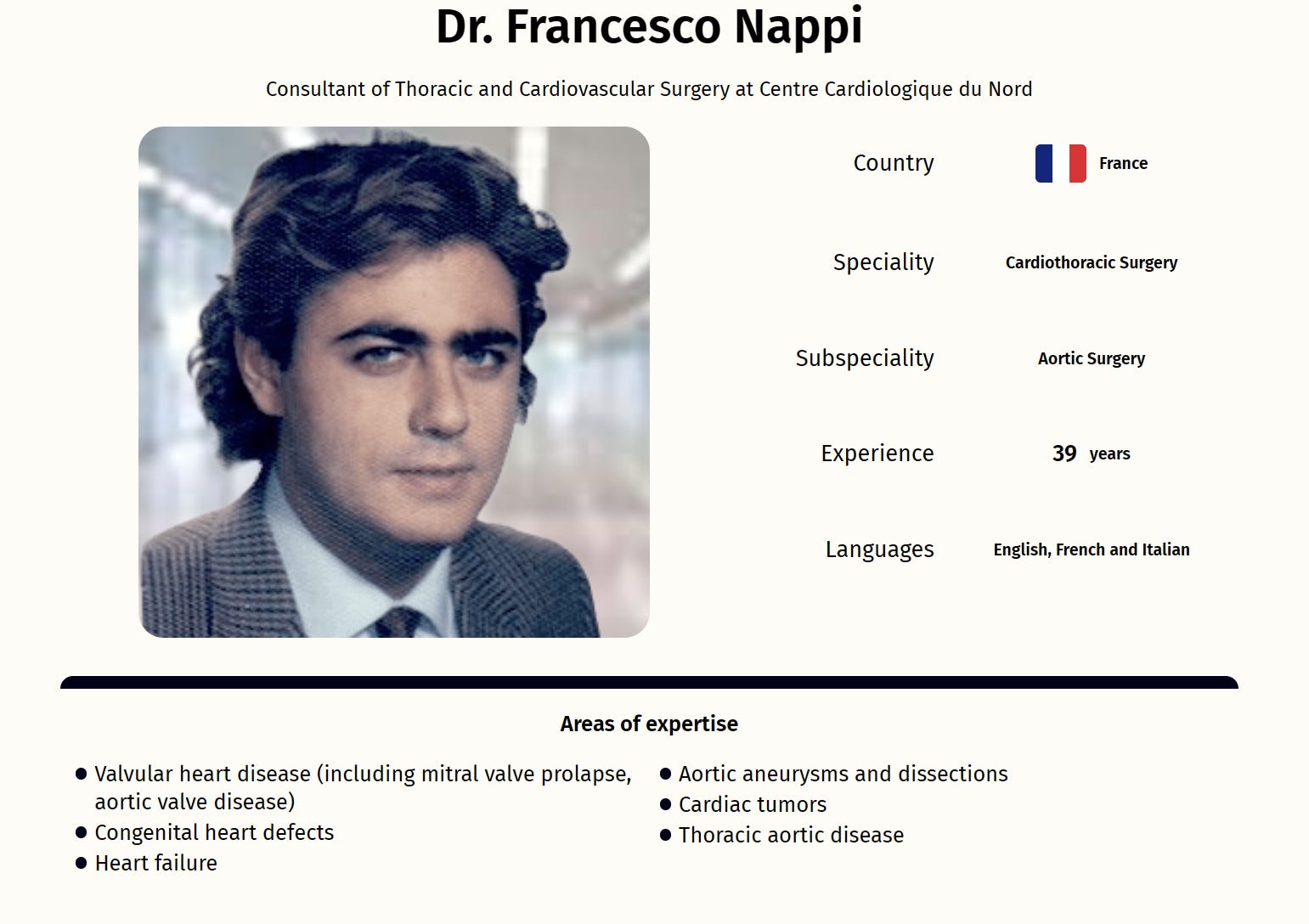
Francesco Nappi replies
Dear Colleague,
Kindly supply your h-index so that we may evaluate the robustness of your arguments.
The absence of the h-index data renders any discussion futile.
Kind regards,
Francesco Nappi
My reply to Nappi
My h-index is readily available in Google Scholar. It is 8.
My h-index would a lot higher, but when I left MIT in 1980, I went into business so academic papers were not a priority for me. I started multiple billion dollar companies.
Dr. Steven Quay, who has testified in Congress and has an h-index of 59, is very familiar with my latest research which you can download here: https://www.skirsch.com/covid/KCOR/KCOR.pdf entitled: “KCOR: A depletion-neutralized framework for retrospective cohort comparison under latent frailty”
Former Yale Professor Harvey Risch, thinks highly of this novel approach as well. He invited me on his podcast a while ago for a one-hour interview to talk about it. Risch has an h-index of 115 and is a Fellow of the American College of Epidemiology.
KCOR is being prepared for publication in Statistics in Medicine. The paper addresses how to neutralize the static HVE bias which is an important unsolved problem in epidemiology when dealing with retrospective vaccine studies. Dynamic HVE as you know, is easy to neutralize. But nobody has figured out how to properly neutralize static HVE. Without that neutralization, comparing vaccinated vs. unvaccinated in existing studies is unreliable.
Existing approaches rely on 1:1 matching and Cox model, but Obel and others confirmed those approaches don’t work as I note in the paper.
My approach is an out of the box method that inverts gamma frailty and uses a very clever curve fitting approach to neutralize the gamma frailty of the unvaccinated cohort. It’s been there the whole time but people have been trained so heavily that Cox with 1:1 matching is how you do studies that people never consider that observing the mortality rate and computing the instantaneous hazard function for death for each cohort is the key to neutralizing bias.
With ideal data, it achieves 100% accuracy in correction enabling us to, for the first time, compare vaccinated and unvaccinated cohorts. Multiple AI engines think this is a huge breakthrough paper. The match to real world data is typically within 2%. No other method comes close.
So for the first time, we can neutralize the most important bias in observational vaccine studies.
Do I pass your bar of being worthy to talk to?
If not, I can ask Bert Vogelstein to vouch for me. He has an h-index of 291.
Let me know if you have any questions.
The recent Hooker paper is fascinating. Hooker made several mistakes in his paper that impact his result, but none of these errors can explain the sex bias. This is PRECISELY why honest scientists should be opposing REMOVAL of the paper.
Preprints allows the scientific community to comment on, and improve, promising research. Through preprints, I was able to point out the flaws in Hooker’s paper, and the authors concurred with the 5 changes I suggested.
But I could also see a huge real signal in this paper, not impacted by the errors. It is important that Hooker revise and resubmit, but the more eyes on the preprint, the better the resubmission will be.
-steve
My second reply to Nappi after he ignored my first reply
Dr. Nappi,
Is there any other information you require from me before we can talk about the decision of the Advisory Board to remove the Hooker paper?
Since academic qualifications are important to you, I should point out that even UPenn Professor Jeffrey Morris (Director of the Division of Biostatistics at UPenn), publicly agrees with us that the paper should NOT have been REMOVED from preprints.
Professor Morris is an expert in vaccine studies and biostatistics so the Hooker paper is squarely in his strike zone.
From publicly available information on the Preprints.org Advisory Board, there is no indication of ANY member with deeper or more specialized expertise in vaccine studies—particularly rigorous biostatistical analysis of observational vaccine safety/effectiveness data, bias correction, cumulative outcomes, frailty/HVE issues, or vaccine pharmacovigilance systems—than Jeffrey S. Morris at UPenn.
So I would really like to hear your reasoning as to why the Preprints Advisory Board voted to REMOVE this paper when scientists like Morris with greater expertise in the field feel this paper should not have been removed.
Did Morris get it wrong? How? And how can you be sure?
Also, did you have any questions on my KCOR paper? Do you agree it is an important new addition to the field?
We are looking forward to your reply.
Summary
Nappi was the ONLY member of the Preprints Advisory Board willing to engage in my letter (out of hundreds of members).
When he discovered my academic credentials were non-trivial, he stopped replying.
This is how “science” works today.
A few other Preprints Advisory Board members said this was not in their lane, so declined to comment or get involved in any way to right the wrong.
That’s why these unethical practices continue.
The honest people stay in their lane and say nothing.
The dishonest people run and hide when challenged.
This reminds me of the Upton Sinclair quote: "It is difficult to get a man to understand something, when his salary depends upon his not understanding it". However I think it's an even worse scenario: Dr. Nappi went through the European medial school right after high school and more than likely never even studied calculus let alone statistics. In my opinion, he doesn't have the knowledge to debate you or even to understand your arguments.
Mr Kirsh- you are so appreciated for what you do! Thank you