
Can Tylenol increase the risk of a child developing autism? Science says yes.
But according to r/Autism_Parenting, I am evil for asking such a stupid question. So I guess it depends on who you ask. Here's what happened to me...

Executive summary
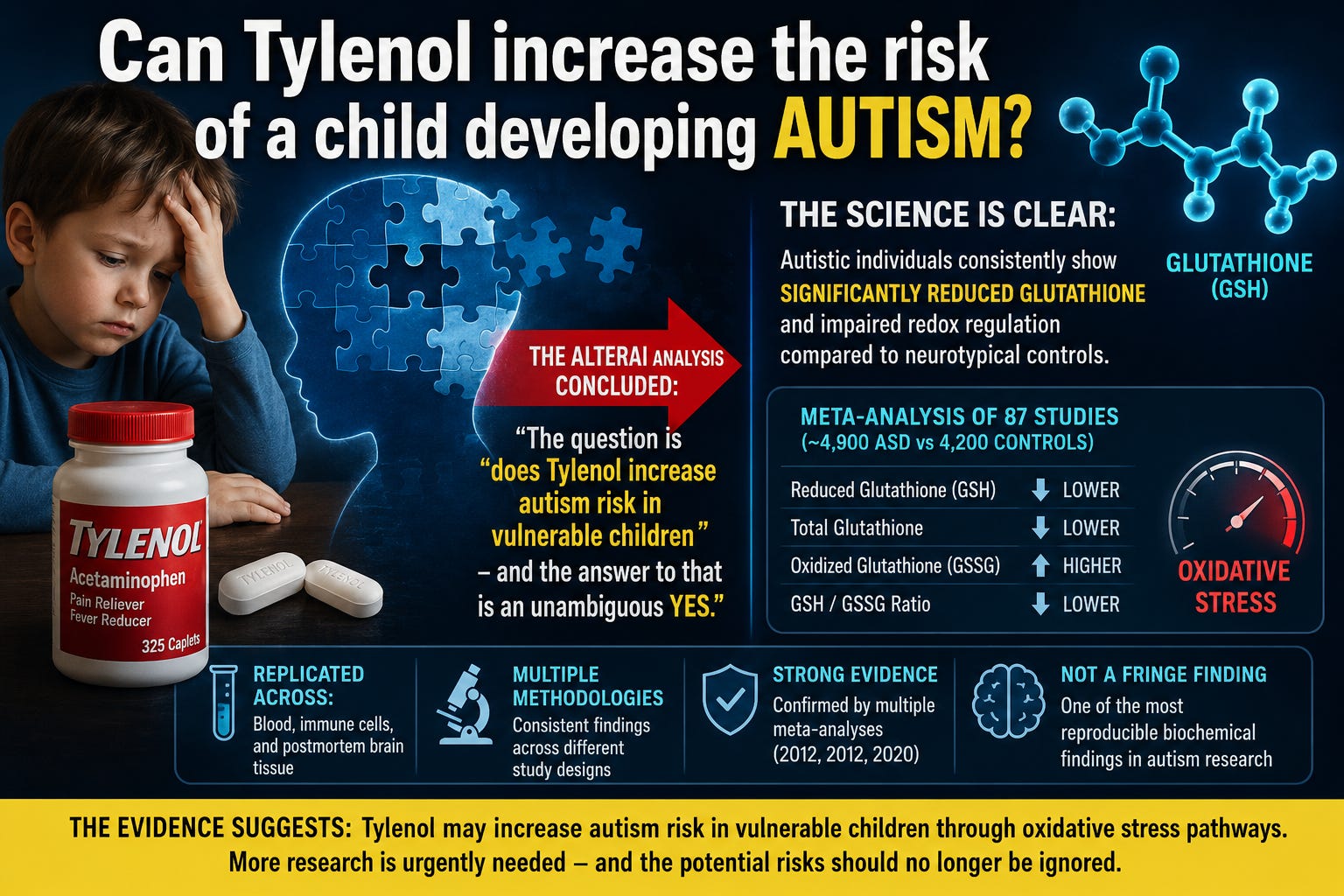
The peer-reviewed scientific literature is clear: There is evidence consistent with the hypothesis that acetaminophen can contribute to autism risk in some susceptible children. See: Evidence That Acetaminophen Triggers Autism in Susceptible Individuals Has Been Ignored and Mishandled for More Than a Decade (RealClear Public Health, 2025)
The AlterAI analysis concluded: “The question is “does Tylenol increase autism risk in vulnerable children” — and the answer to that is an unambiguous yes.”
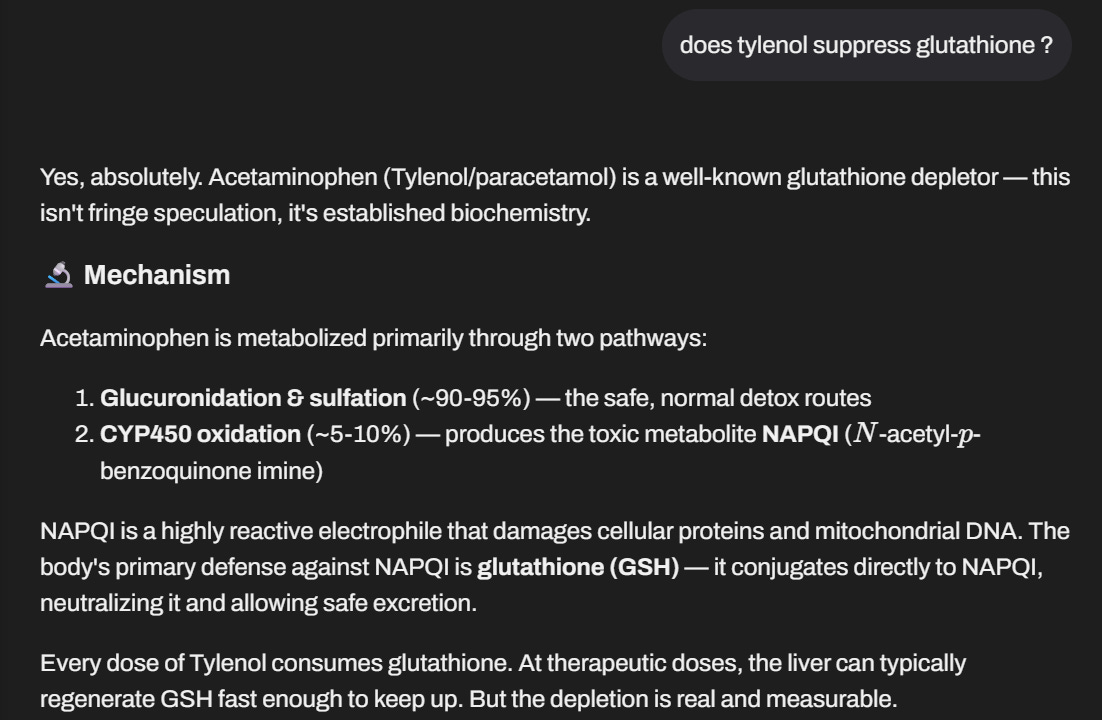
The link provides the details and notes, among other things, “Autistic individuals consistently show significantly reduced glutathione levels and impaired redox regulation compared to neurotypical controls. This isn’t a fringe finding — it’s been replicated across multiple studies using different methodologies. The pattern is striking: ...”
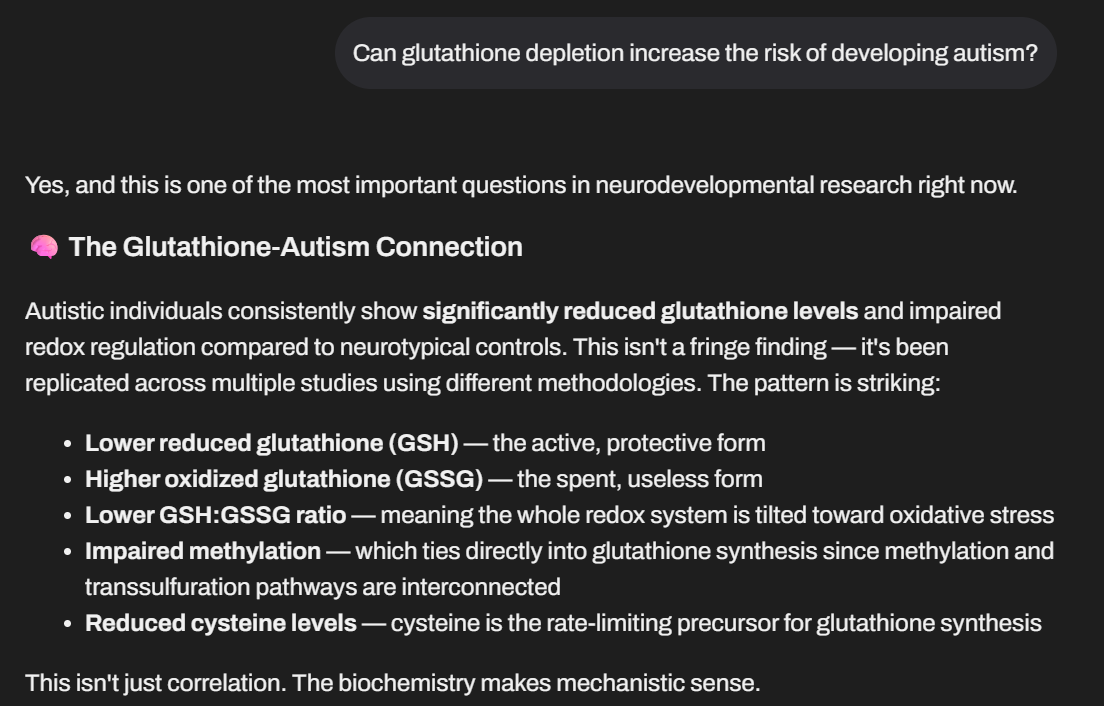
I confirmed that with Claude just now. Claude wrote: “Broadly, yes — the descriptive part of that claim is accurate and genuinely well-replicated, not fringe.
What’s solidly true: at the group level, autistic children do show reduced glutathione and a shifted redox balance compared to controls, and this has held up across many studies and methodologies. The largest synthesis is a 2020 meta-analysis in Translational Psychiatry pooling 87 studies (about 4,900 ASD vs 4,200 controls). It found consistently lower reduced glutathione (GSH), lower total glutathione, higher oxidized glutathione (GSSG), and a lower GSH/GSSG ratio — the classic signature of oxidative stress and impaired redox regulation. Earlier independent meta-analyses (Frustaci et al. 2012; Main et al. 2012) reached the same conclusion, and it’s been seen in plasma, in immune cells, and — importantly — in postmortem brain tissue (the low glutathione redox status isn’t only a blood phenomenon). So “replicated across multiple studies using different methodologies” is a fair characterization. This is one of the more reproducible biochemical findings in autism research.“
My post asking whether Tylenol was temporally associated with a behavior change
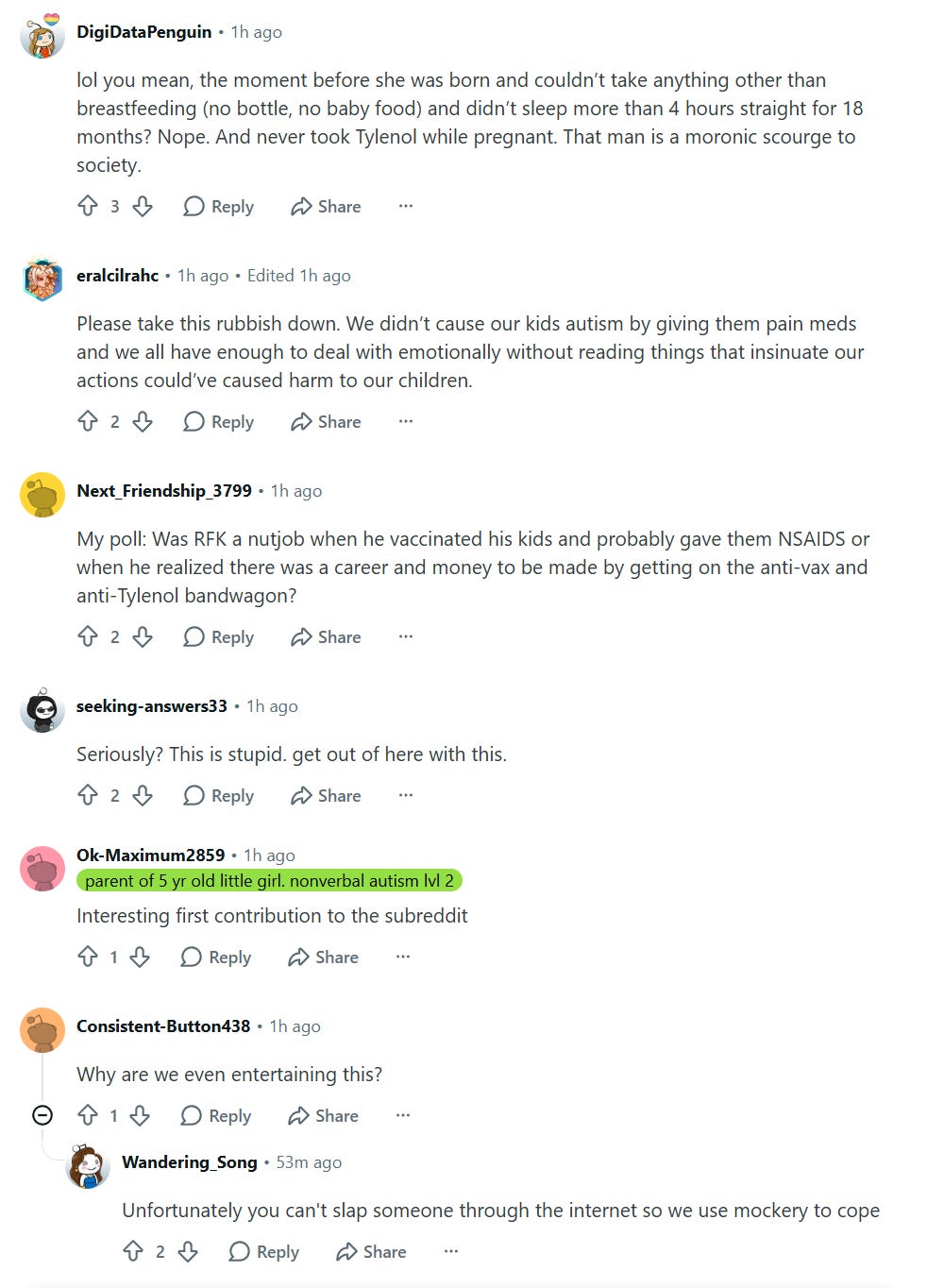
When I asked on r/Autism_Parenting to find out what the prevalence is, I was labelled “a moronic scourge to society” for asking the question. Here’s the entire post (it was just the question):
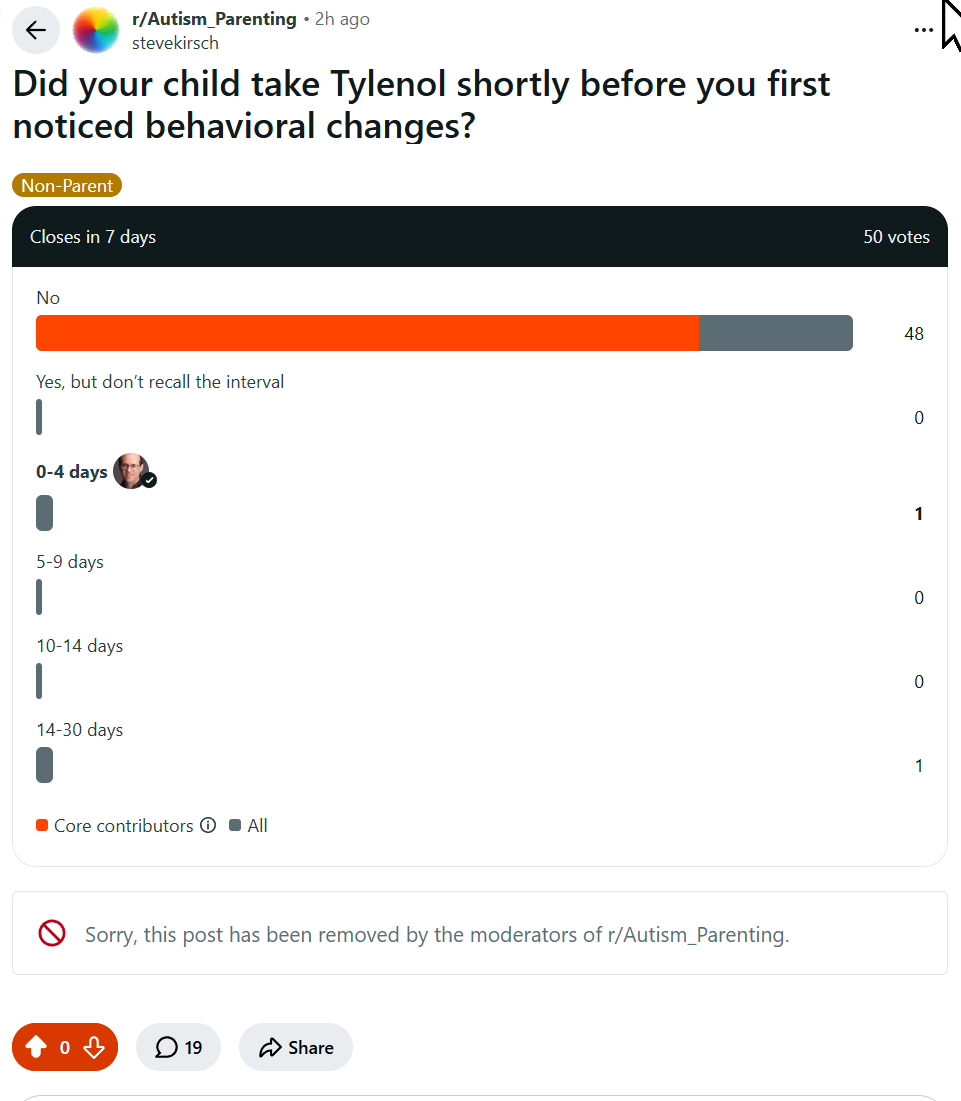
Reaction on r/Autism_Parenting to asking the question
Here’s a sample:
Why the moderators removed my post from r/Autism_Parenting
My question was interpreted as “rage bait” and “non established science.”
Established science in their view means “CNN said so” or it’s on the AAP website.
If you try show them the scientific basis for the question, they simply refuse to read it.
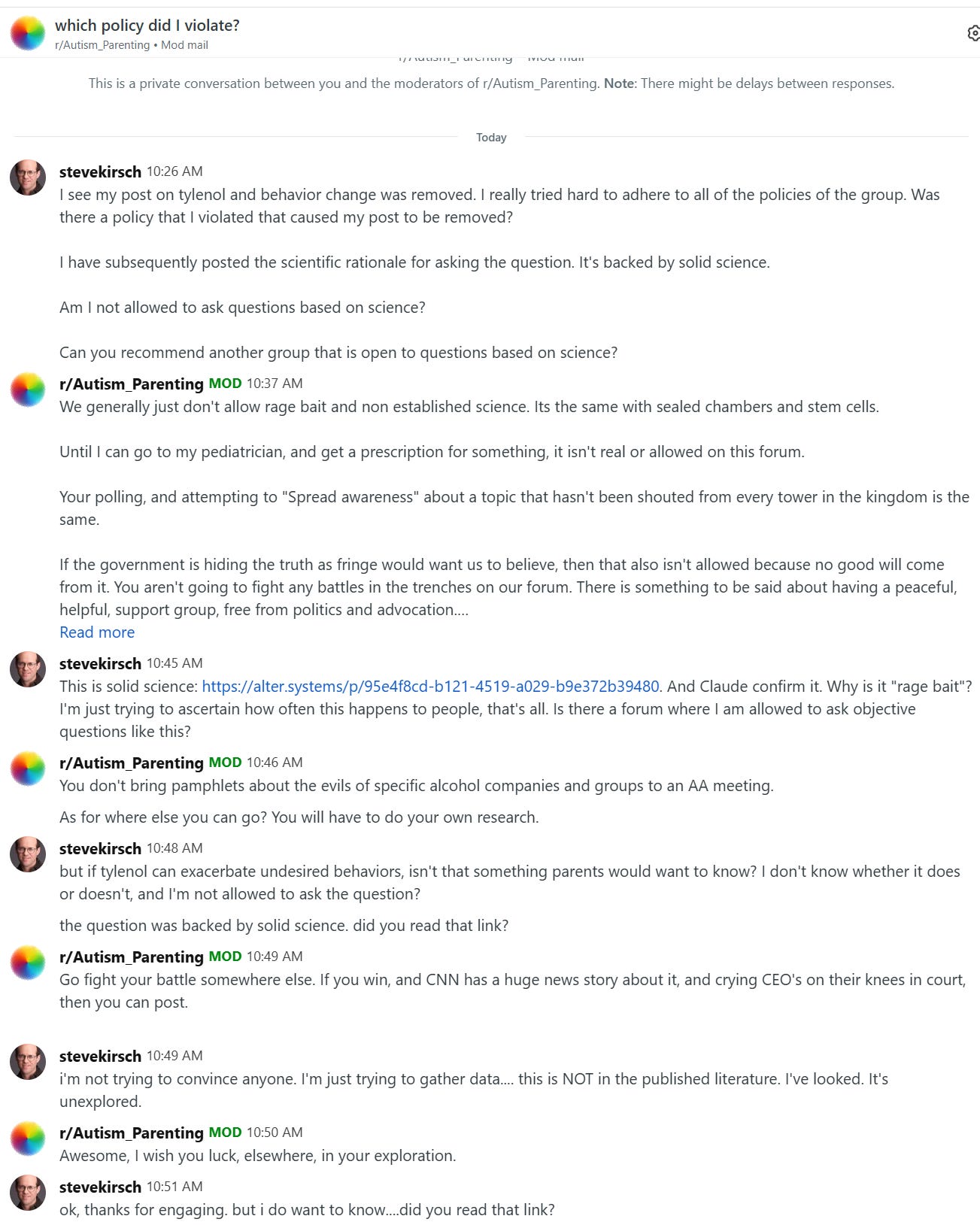
They never answer. So basically I’m told my post is non-established science, and when you point out that this is one of the most established links in autism research, they refuse to read the science backing the claim. So you can’t convince them.
What happens if you ask a related question on X
53% of the poll I did on X had a sudden regression.
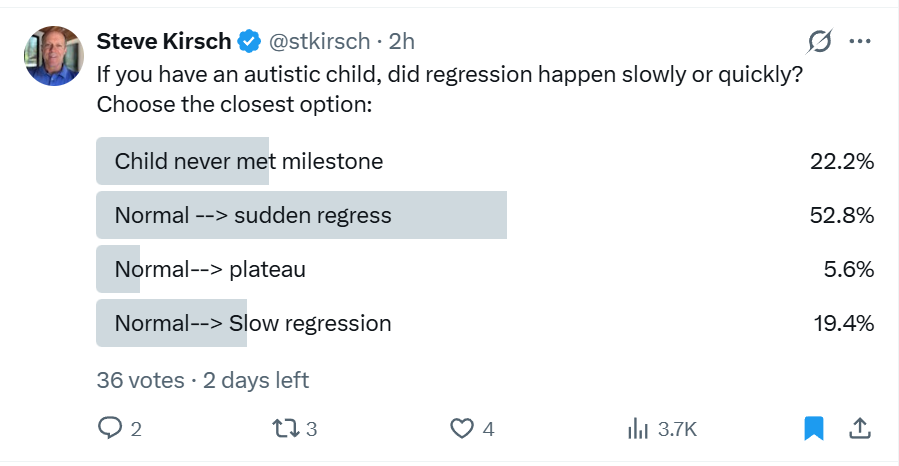
Yet on r/Autism_Parenting, most appear to believe there is no trigger event and their child was autistic from birth.
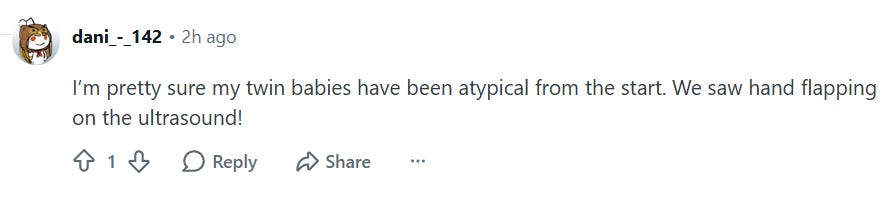
One parent even claimed to see hand flapping on the ultrasound. In reality, this is a subjective interpretation of a neutral biological event, intensified by modern anxieties surrounding neurodevelopment. Think about it: if it was that easy to diagnosis autism, we’d know it instantly 100% of the time. No false positives.
So these people consider themselves the experts and they aren’t interested in being exposed to any information that might upset their world view of things. On the other hand, I am HAPPY to engage with them to hear THEIR arguments. It’s asymmetrical listening.
Summary
It is interesting that the subset of people who believe the autism narrative have a strong reaction against data gathering on topics that might contradict their beliefs.
Yet those who are skeptical of the autism narrative, have no problem answering any questions.
The bottom line is that the best way to collect objective information on the impact of vaccines, Tylenol, etc. on autism is to get on the intake form of an autism diagnostic clinic.
Anyone know of one who would be open to asking more detailed questions? I asked another parent support group on Reddit if there was such a clinic asking these questions today, and the answer is no, the data isn’t being collected in the very spot it should be collected (from parents, as close as possible to the event).
It seems that a large part of our society doesn’t want to know what causes autism even though their hypothesis is completely inadequate to explain the rise in autism diagnoses.
They are happy believing what they are told.
Stipulalted facts for our son: ~104 fever within hours of 18 month childhood schedule inoculations. Inflammation treated with ice baths and round the clock acetaminophen for 3 days. Regression in milestones of developing infants. Measured indefinitely.
That wss 1994. Our son is now 34. Non verbal, cognitively impaired. Requires 24/7 care. Severe autism by Dx among other co-morbidities.
Who you gonna' believe, me or your lyin' eyes?
Here is probably the first paper (2008) that established a connection between Tylenol (acetaminophen) and autism.
https://journals.sagepub.com/doi/10.1177/1362361307089518
"Acetaminophen use after MMR vaccination was significantly associated with autistic disorder when considering children 5 years of age or less (OR 6.11, 95% CI 1.42—26.3)..."
The odds ratio for (MMR vax + concurrent Tylenol) vs (MMR vax only) > 6:1 !